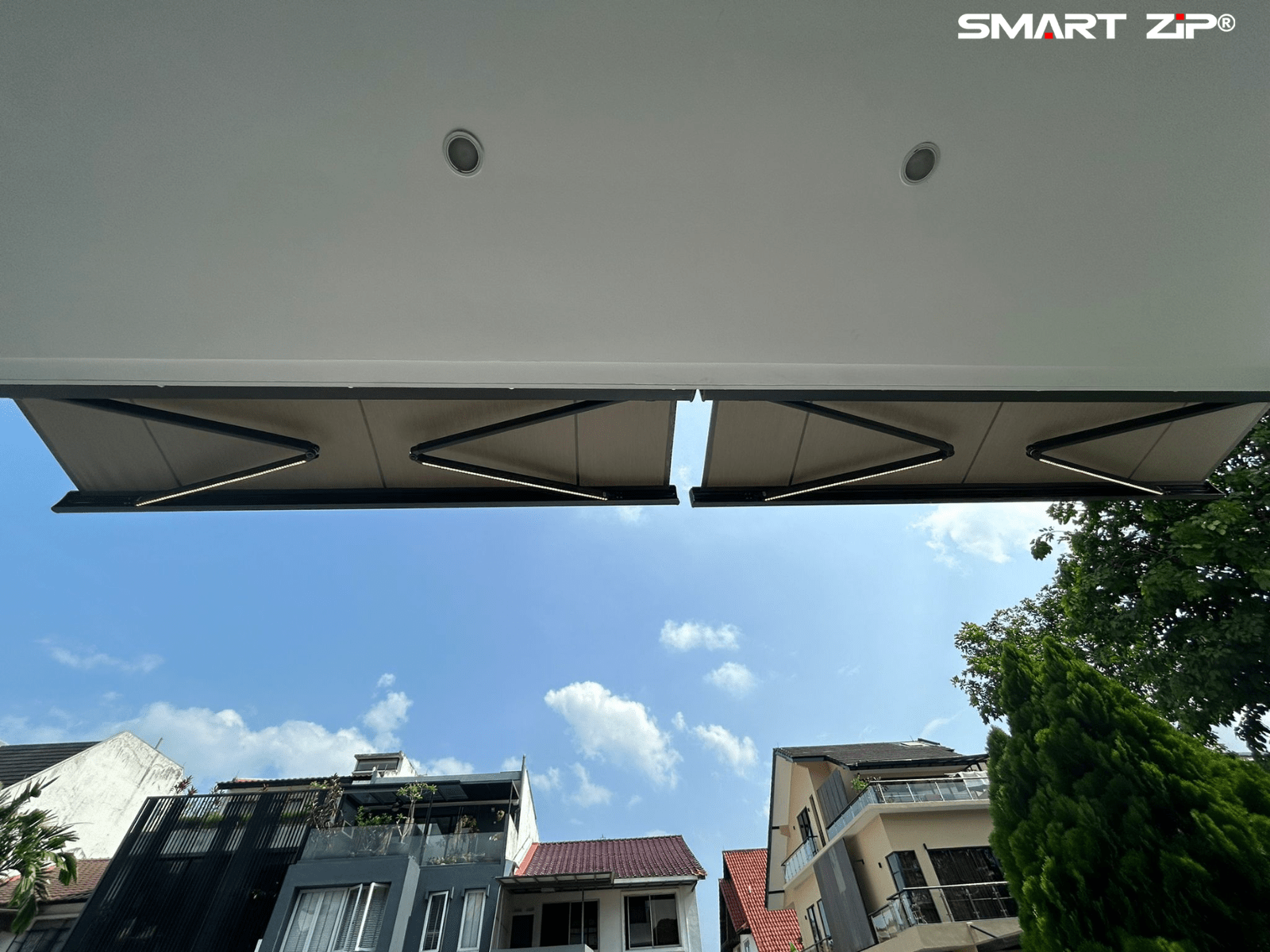


Car porch roofing Singapore homeowners install must protect vehicles while keeping daily arrival, parking and entry convenient. A roof that is too low, poorly drained or supported in the wrong place can create new problems even if it blocks the sun.
This guide covers the practical decisions behind awnings, pergolas and fixed shelters for landed-home driveways. It focuses on vehicle clearance, heat, drainage, lighting and long-term use.
Set clear goals for car porch roofing Singapore
Decide whether the roof is mainly for solar protection, rain coverage, a sheltered path to the entrance or all three. A parked car needs shade across its cabin, but passengers also need a dry route to the door. Observe where afternoon sun and wind-driven rain enter before setting the coverage line.
Include future needs. A larger vehicle, bicycle storage or an EV charger may change the required clearance and electrical layout. The design should solve present conditions without limiting foreseeable use.
Compare a retractable awning with a framed roof
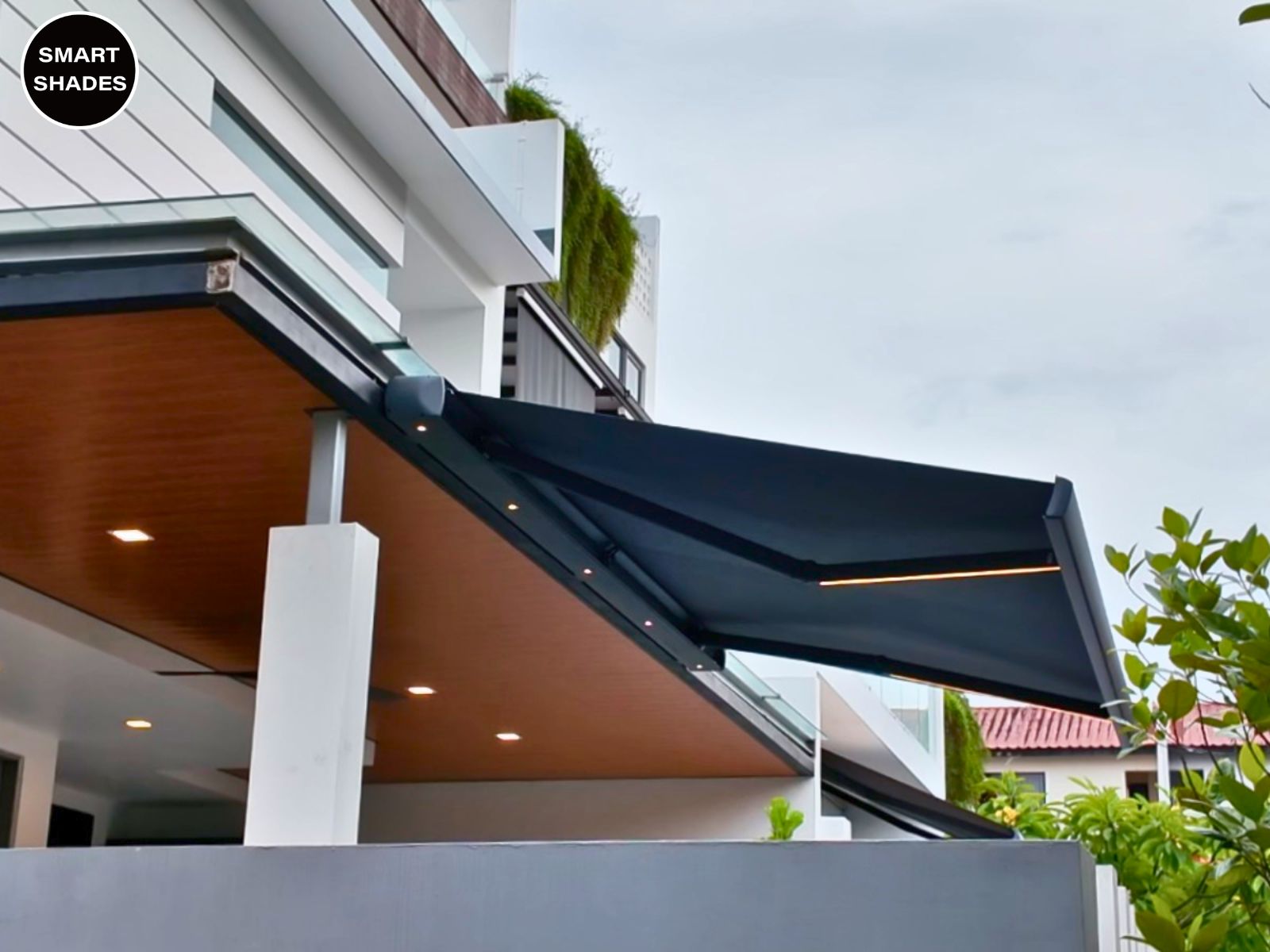
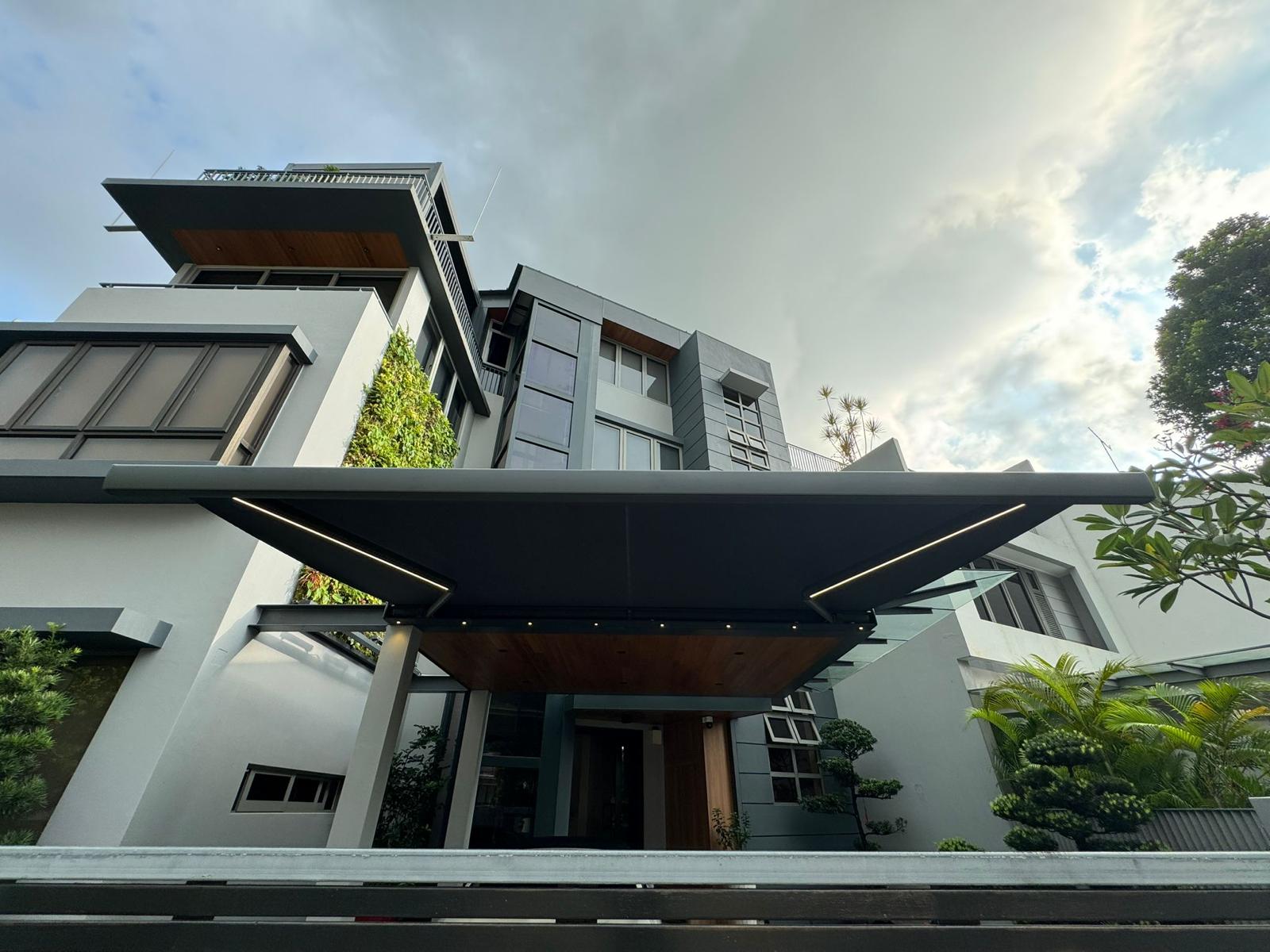
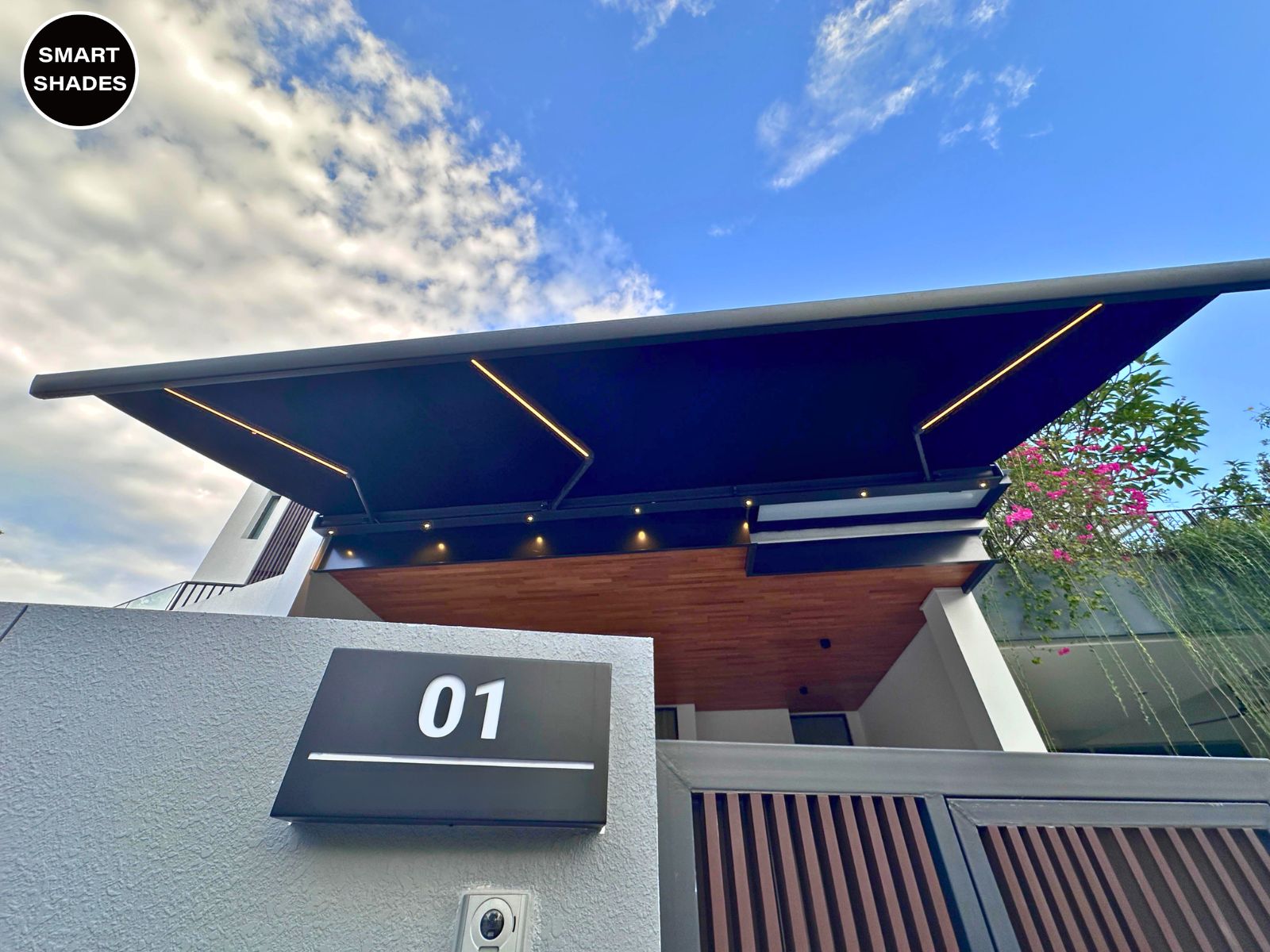
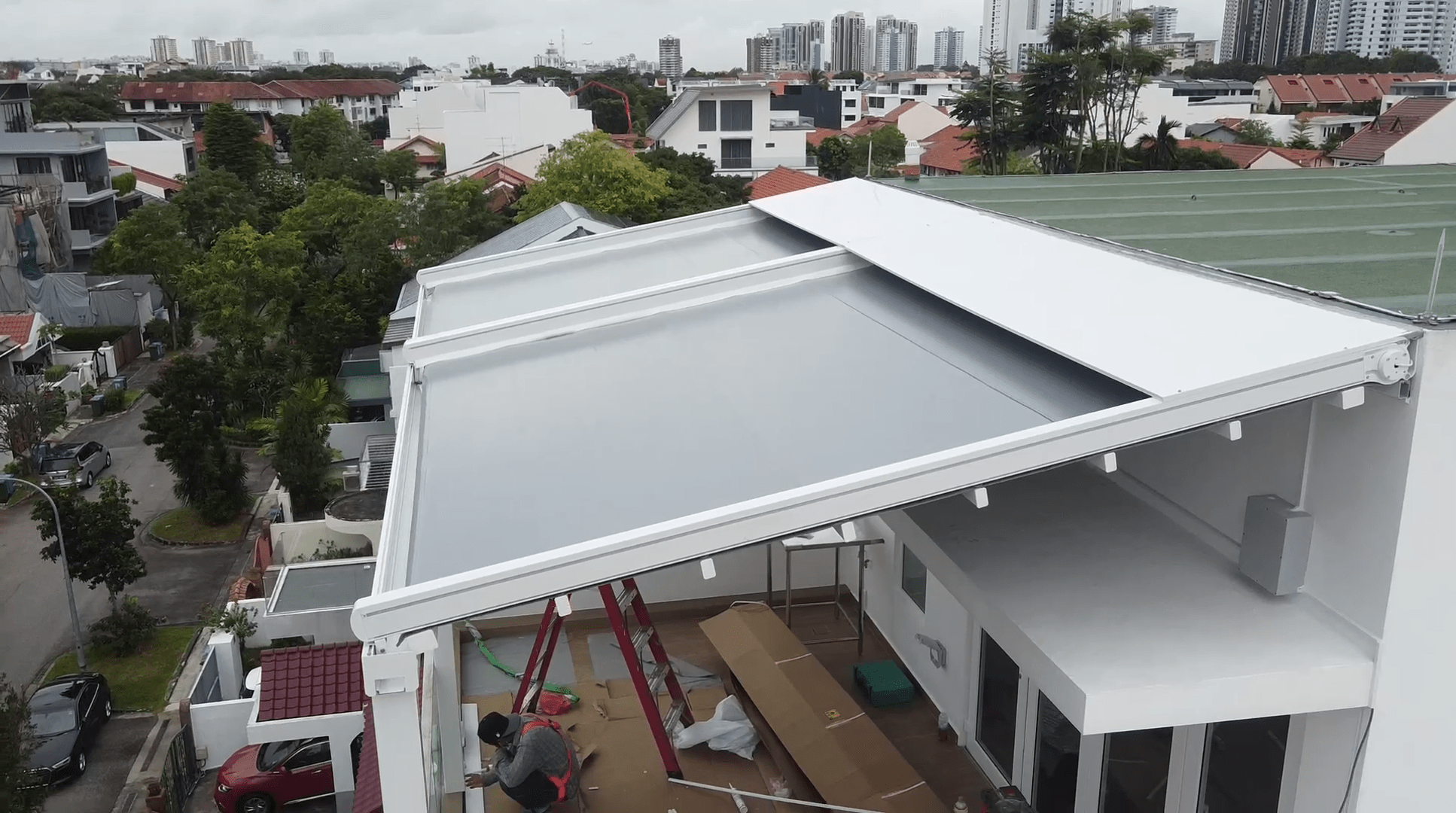
A motorised retractable awning can extend over a vehicle without front posts. It retracts to open the driveway and reduce visual weight. Owners must operate it within the recommended weather limits and maintain the exterior fabric and moving arms.
A framed pergola or trellis roof offers permanent support and can cover a wider outdoor room. Posts and foundations require more planning, but the structure can integrate drainage and lighting. Adjustable louvers provide ventilation when open, while fixed panels provide continuous coverage.
Measure vehicle movement, not only the parking rectangle
Survey the full path from gate to parking position. Check turning space, mirror clearance, boot opening height and the route passengers take around the car. Posts should not sit where drivers naturally swing in or where doors need to open.
Mounting height must allow comfortable headroom and clearance for taller vehicles. The roof projection and pitch should protect the car without extending into restricted boundaries or affecting gate movement.
Manage heat below the car porch roof
Shade reduces direct heating of the vehicle, but roof material also affects comfort. Opaque panels provide strong shade but may darken an adjacent room. Translucent polycarbonate admits light, with tint and construction influencing heat. Adjustable louvers can release warm air, and retractable fabric can open the roof when shade is unnecessary.
Choose frame and roof colours with both architecture and maintenance in mind. A coordinated finish makes the car porch feel integrated with the house rather than added later.
Direct rainwater away from people and vehicles
A car porch roof collects a substantial volume of water. Gutters and downpipes must be sized and positioned so overflow does not fall at the driver’s door, entrance path or gate controls. Water should discharge into a suitable drain without flowing across the driveway.
Wind-driven rain may still enter through open sides. Increasing roof coverage or adding compatible side protection can help, but side elements affect wind loading and ventilation and should be planned with the main structure.
- Mark door-opening and walking zones before locating posts.
- Confirm clear height for the current and future vehicle.
- Keep drainage away from electrical and gate equipment.
- Plan lighting for parking and the route to the entrance.
- Retain access for roof and gutter cleaning.
Structural fixing deserves the same attention as roof material. A cantilevered awning transfers forces into the wall, while a framed roof transfers loads through posts and foundations. Existing driveway finishes may need careful removal and reinstatement around new footings. Ask how waterproofing and concealed services will be checked before drilling.
Add lighting and electrical provisions early
Integrated LED lighting improves safety at night and helps drivers judge distance. Controls should be accessible from the house and vehicle arrival route. If an EV charger, gate motor or camera shares the area, coordinate power supplies to avoid exposed cables and repeated drilling later.
Outdoor electrical work needs suitable protection and service access. Confirm what is included in the roofing quotation and what requires a separate licensed contractor.
Review approvals and property boundaries
Roof extensions may be subject to property, planning or management requirements. Owners should confirm the rules that apply to their home before fabrication. Dimensions must respect boundaries, neighbouring drainage and shared access.
The installer should provide a clear drawing showing width, projection, height, support points and discharge locations. Do not rely on a verbal description for a structure that affects the façade and driveway.
Plan routine cleaning and servicing
Car porches collect dust, leaves and vehicle exhaust residue. Provide safe access to gutters and roof surfaces without moving heavy fixtures. Retractable systems need periodic checks of arms, motors and fabric edges; framed roofs need inspection of seals, fasteners and drainage. A maintenance plan protects the vehicle and reduces the chance of overflow near the entrance.
Choose a solution based on everyday convenience
The best car porch roof is one that protects the vehicle without making parking harder. Compare roof mechanisms, materials, post locations, maintenance and operating requirements together. A technically impressive roof has limited value if it blocks movement or is inconvenient to use.
Review Smart Shades’ outdoor roofing systems and arrange a driveway survey through the contact page.