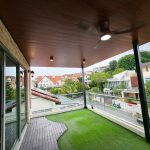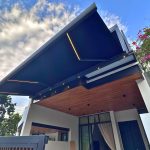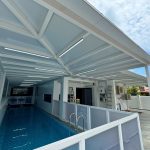


A rainproof pergola Singapore homeowners can depend on must manage more than water falling straight down. Tropical storms combine high rainfall, shifting wind and fast runoff from a large roof area. Reliable protection therefore depends on the roof surface, joints, gutters, drainage outlets and installation quality working as one system.
This guide explains what “rainproof” should mean in practical terms and which questions to ask before choosing a louvered, retractable or fixed pergola.
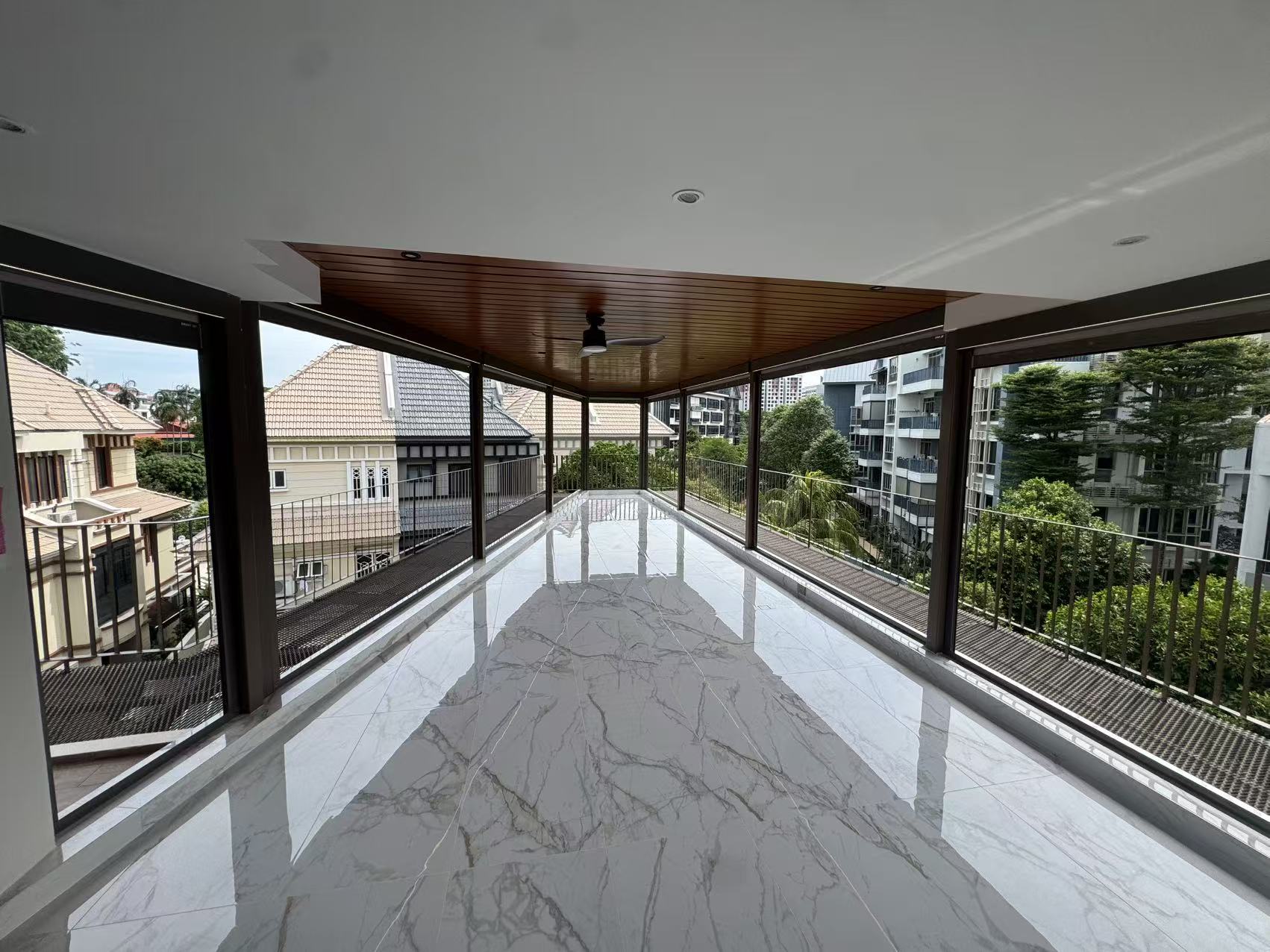
How a rainproof pergola Singapore system handles water
Every roof needs a continuous water path. Rain lands on the closed roof, moves towards a gutter or perimeter channel, enters downpipes or concealed post drainage and discharges at ground level. If any part is undersized, blocked or poorly aligned, water can pool or overflow.
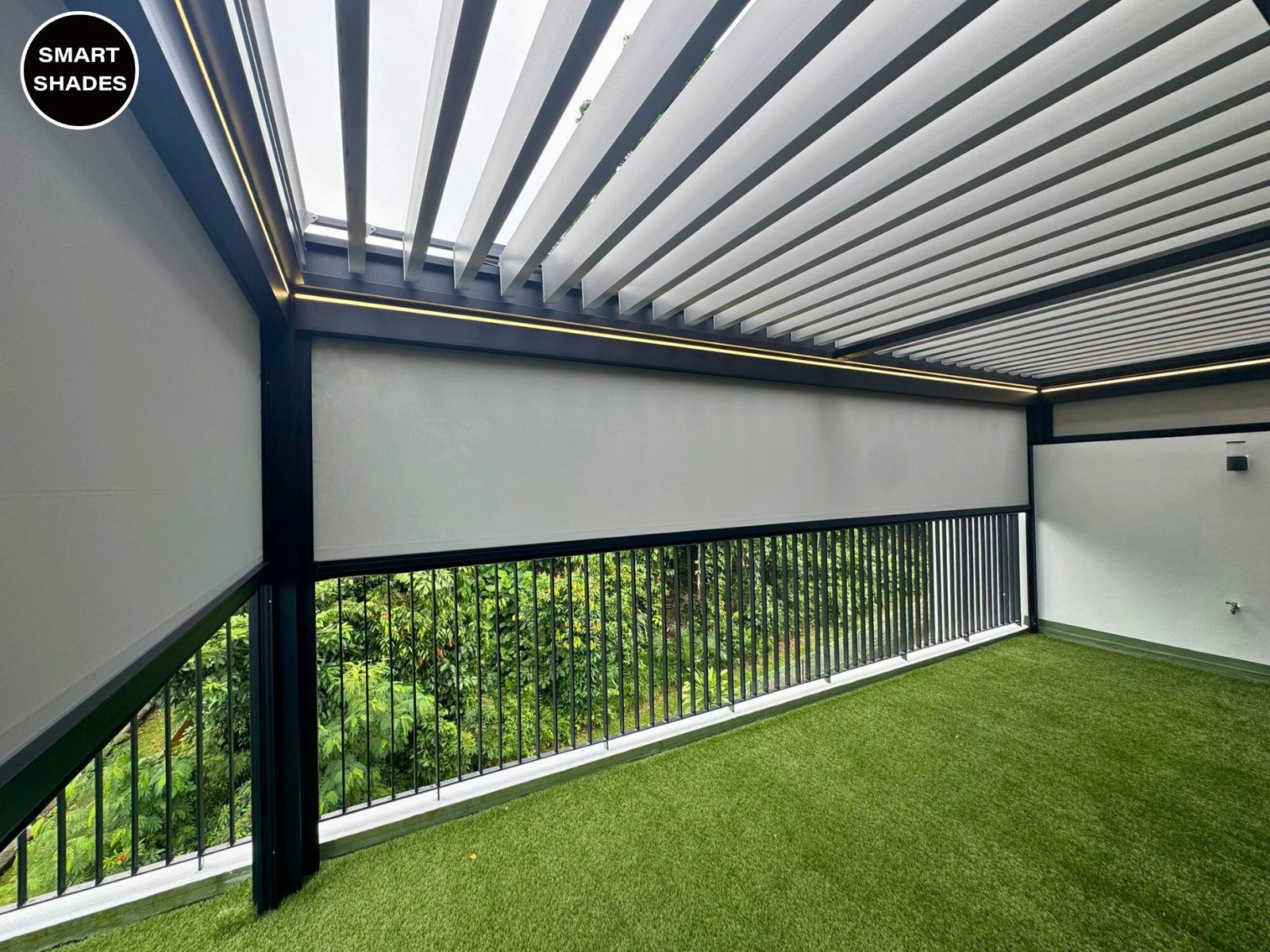
Ask the supplier to identify each part of this route on the drawing. Concealed drainage is attractive, but the outlet still needs to be accessible and directed away from doors, steps and neighbouring property. The Smart Shades bioclimatic pergola uses built-in channels and drainage through support posts for a clean exterior.
Compare louvered, retractable and fixed rain protection
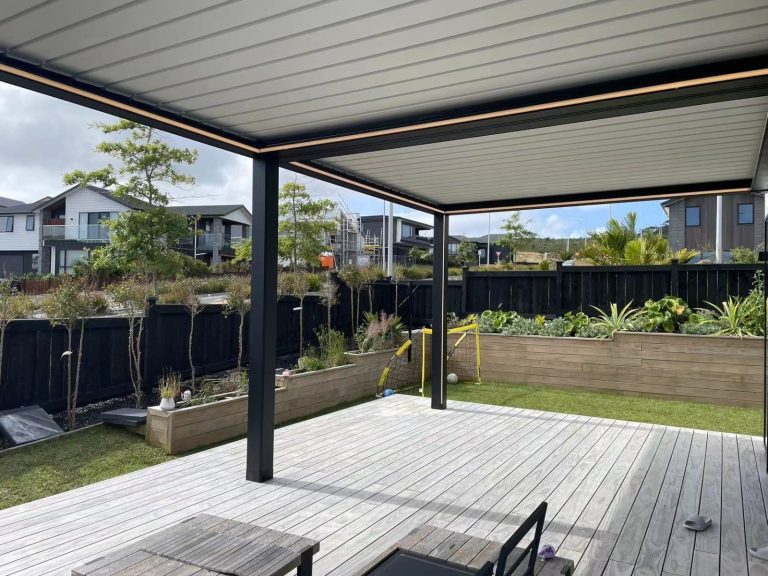
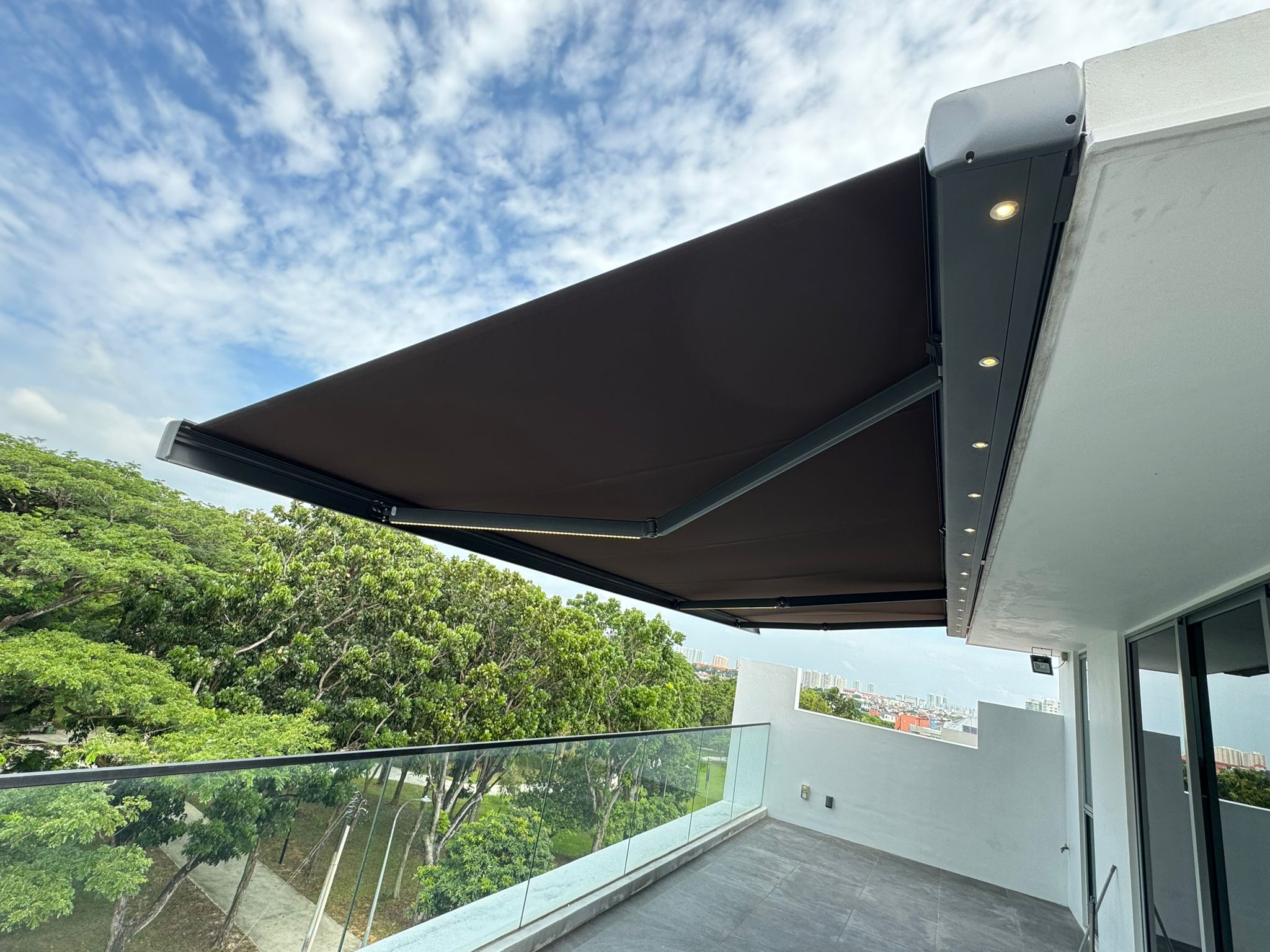
Closed aluminium louvers overlap to form a protective roof while allowing the system to open for ventilation in dry weather. Performance depends on blade alignment, perimeter seals and gutter design. A retractable pergola uses exterior fabric that extends across guides. It provides flexible shelter but must be operated according to its weather limits.
A fixed trellis roof has no moving roof parts and can use polycarbonate, aluminium composite panels or laminated glass. This is often suitable when permanent coverage is the priority. Review these trellis roofing materials alongside the adjustable options.
Understand wind-driven rain and open sides
A roof can control water from above without making an open patio completely dry during a storm. Wind may push rain through the sides, especially at exposed corners. Increase roof coverage where practical and keep sensitive furniture away from the perimeter.
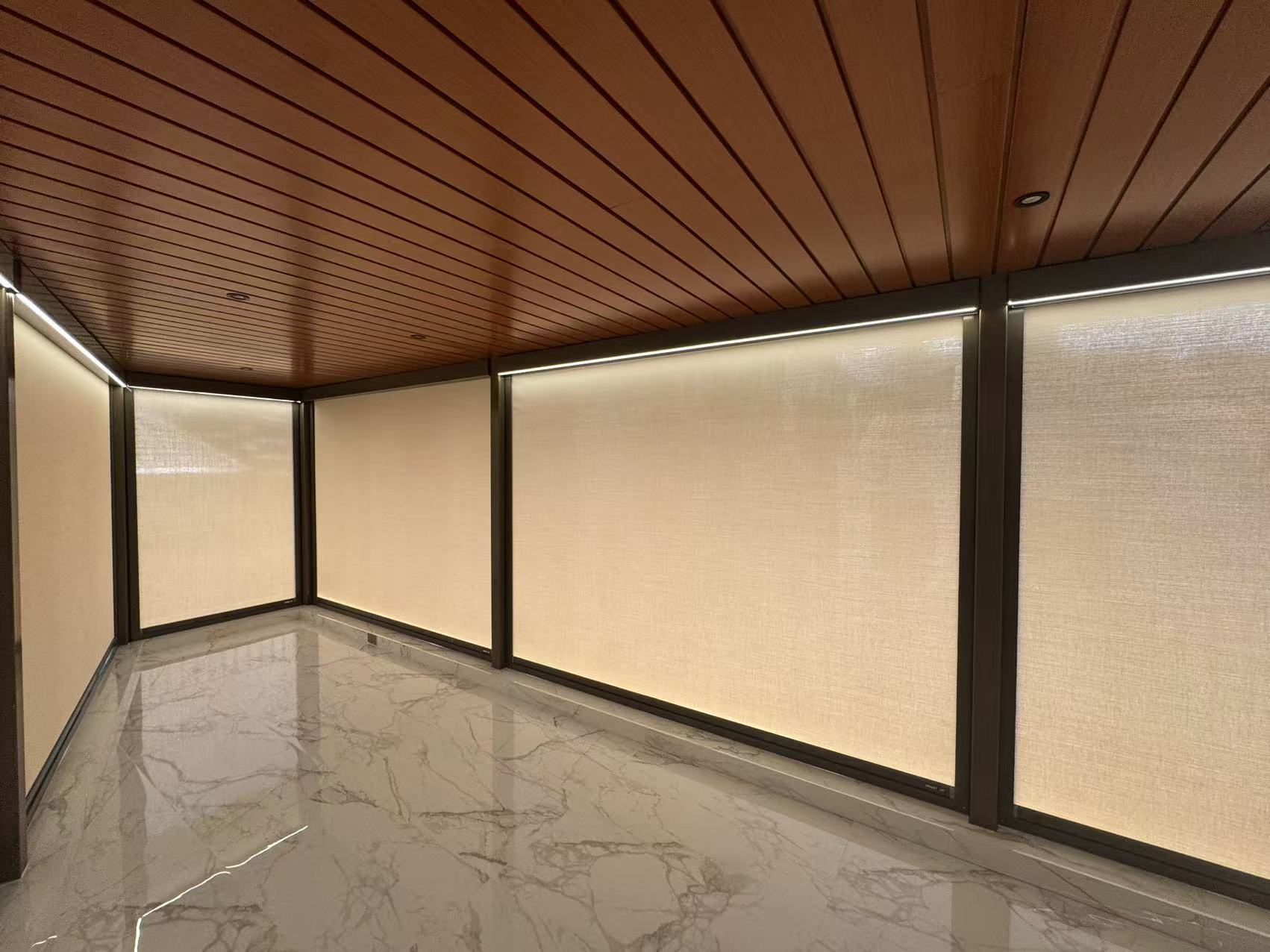
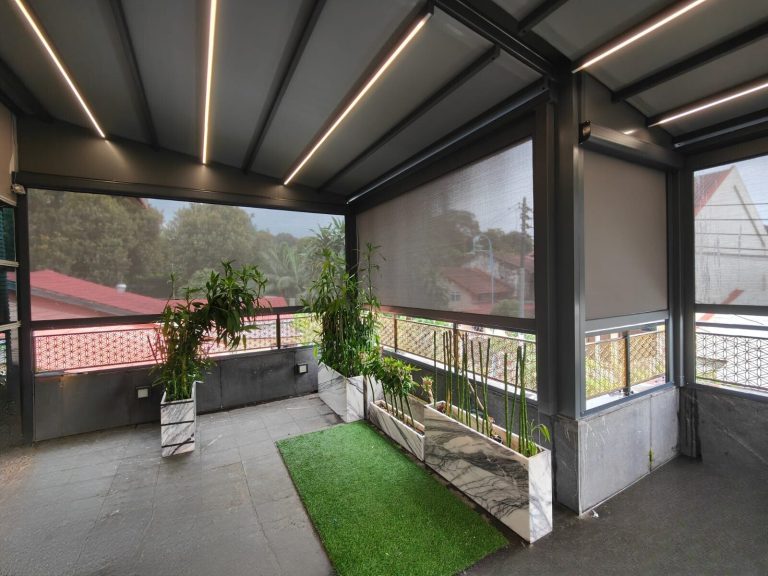
Side blinds or screens can improve protection, but they also affect airflow and wind loading. If these may be added later, include them in the initial structural and electrical planning. Avoid promising a sealed indoor environment unless the enclosure is designed and approved as one.
Roof pitch, seals and alignment matter
Fixed panels and retractable fabric require suitable fall so water moves instead of pooling. Louvered roofs need precise frame and blade alignment so closed surfaces drain consistently. Sealants and gaskets should be compatible with exterior movement, ultraviolet exposure and humidity.
During installation, forcing components to compensate for inaccurate measurements can create uneven joints. A measured frame, correctly positioned channels and tested motor limits help the roof close as designed.
- Confirm the roof’s intended rain-performance limits.
- Check gutter and downpipe capacity.
- Identify every drainage discharge point.
- Ask how joints, blades or fabric edges are sealed.
- Plan access for clearing leaves and debris.
Choose materials for long-term outdoor exposure
Aluminium frames are valued for corrosion resistance, but finish quality and fastener selection still matter. Retractable roofs need technical exterior fabric with the specified water, ultraviolet and fire performance. Fixed transparent panels should be selected for impact, heat and light requirements rather than appearance alone.
Ask for the product specification, care instructions and warranty coverage. A roof that performs well in its first month still needs surfaces, seals, channels and moving parts that can be maintained over many wet seasons.
Test drainage before handover
Final testing should include complete roof operation and controlled water flow through gutters and outlets. Check for unexpected overflow, drips at joints and discharge close to the building. The owner should see how to open and close the roof, operate lights and respond to changing weather.
For a motorised system, learn the safe procedure during a power interruption. Keep remote controls in a known place and avoid operating the roof if an obstruction or unusual sound is present.
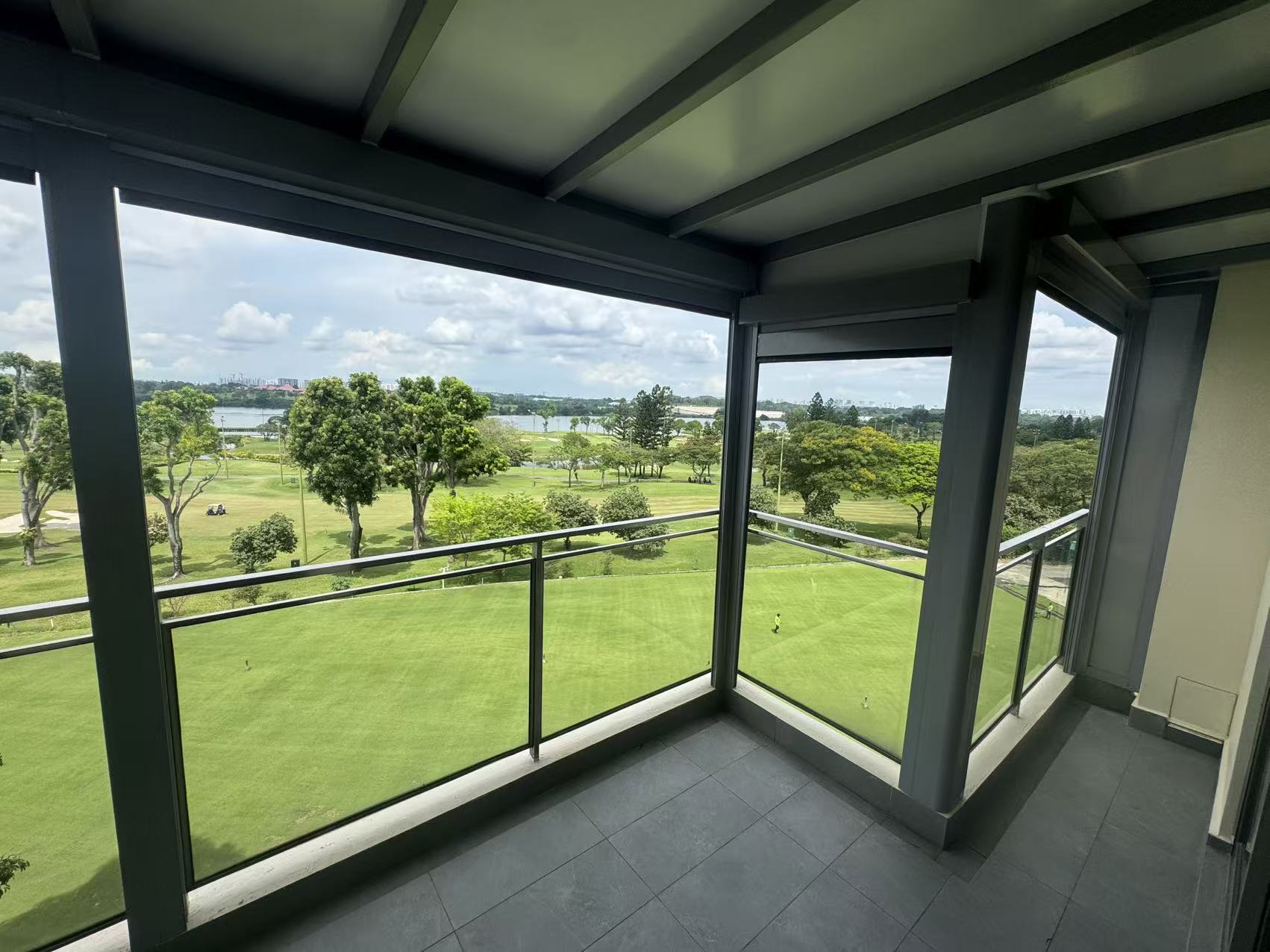
Rain performance should also be considered at the junction with the existing building. Wall flashings, door thresholds and changes in roof height are frequent leakage points. The design should avoid sending water behind cladding or towards openings. Where a new pergola meets an old roof, record clearly which contractor is responsible for the connection and future inspection.
Maintenance keeps a rainproof pergola performing
Leaves and fine debris can reduce drainage capacity even when the roof surface looks clean. Inspect channels and outlets regularly, especially after nearby trees shed material. Clean roof finishes and fabric with approved methods, and allow retractable fabric to dry before leaving it stored for long periods.
Periodic servicing should check motor movement, fasteners, seals and drainage. Address small leaks early because repeated water entry can stain finishes and affect nearby building materials.
Request a site-specific rain management plan
Exposure, roof area, surrounding walls and existing drains differ at every home. A supplier should survey the location and explain how the proposed design handles both overhead rain and side exposure. Compare complete plans rather than relying on the single word “rainproof.”
Explore the full range of outdoor roofing systems or arrange a survey through the Smart Shades contact page.