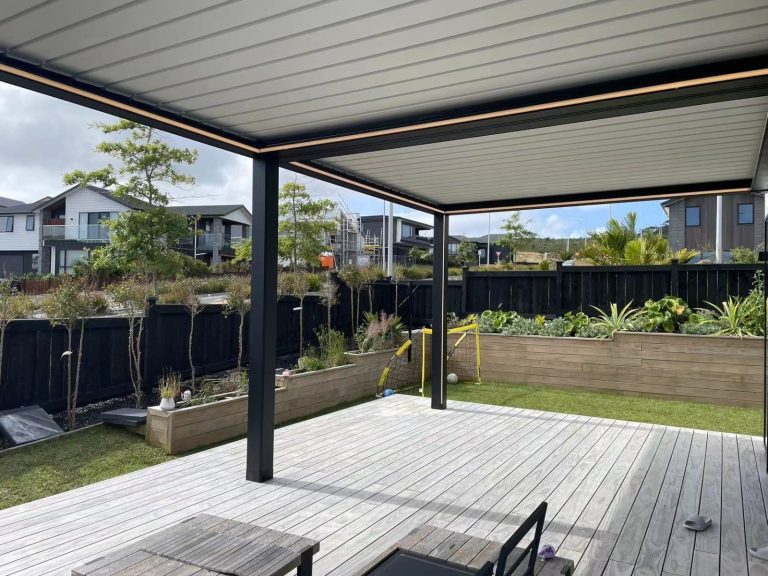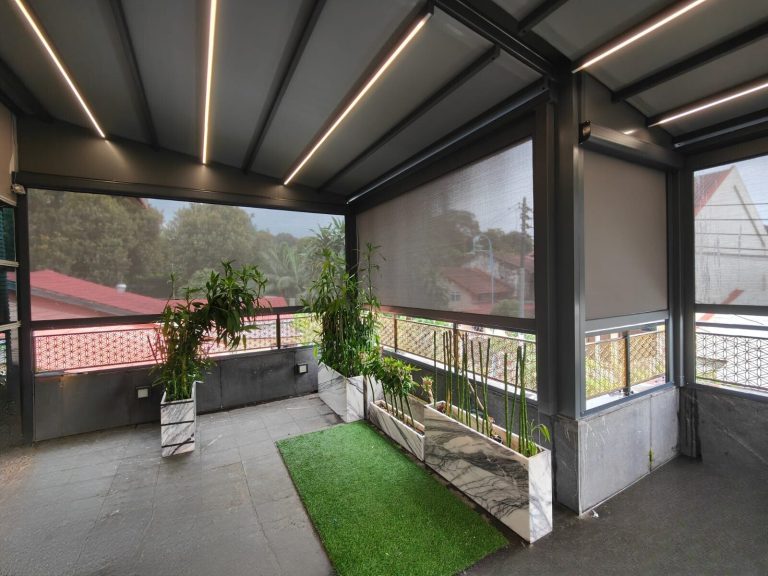


An aluminium pergola can suit a contemporary outdoor space, but the material name tells only part of the story. The frame design, finish, roof arrangement and installation details determine how the completed structure looks and works. Two proposals described as aluminium can still be very different.
Before choosing, ask the supplier to explain the whole assembly. This guide focuses on the details that make quotations easier to compare, from the appearance of beams to the way water and maintenance access are handled.
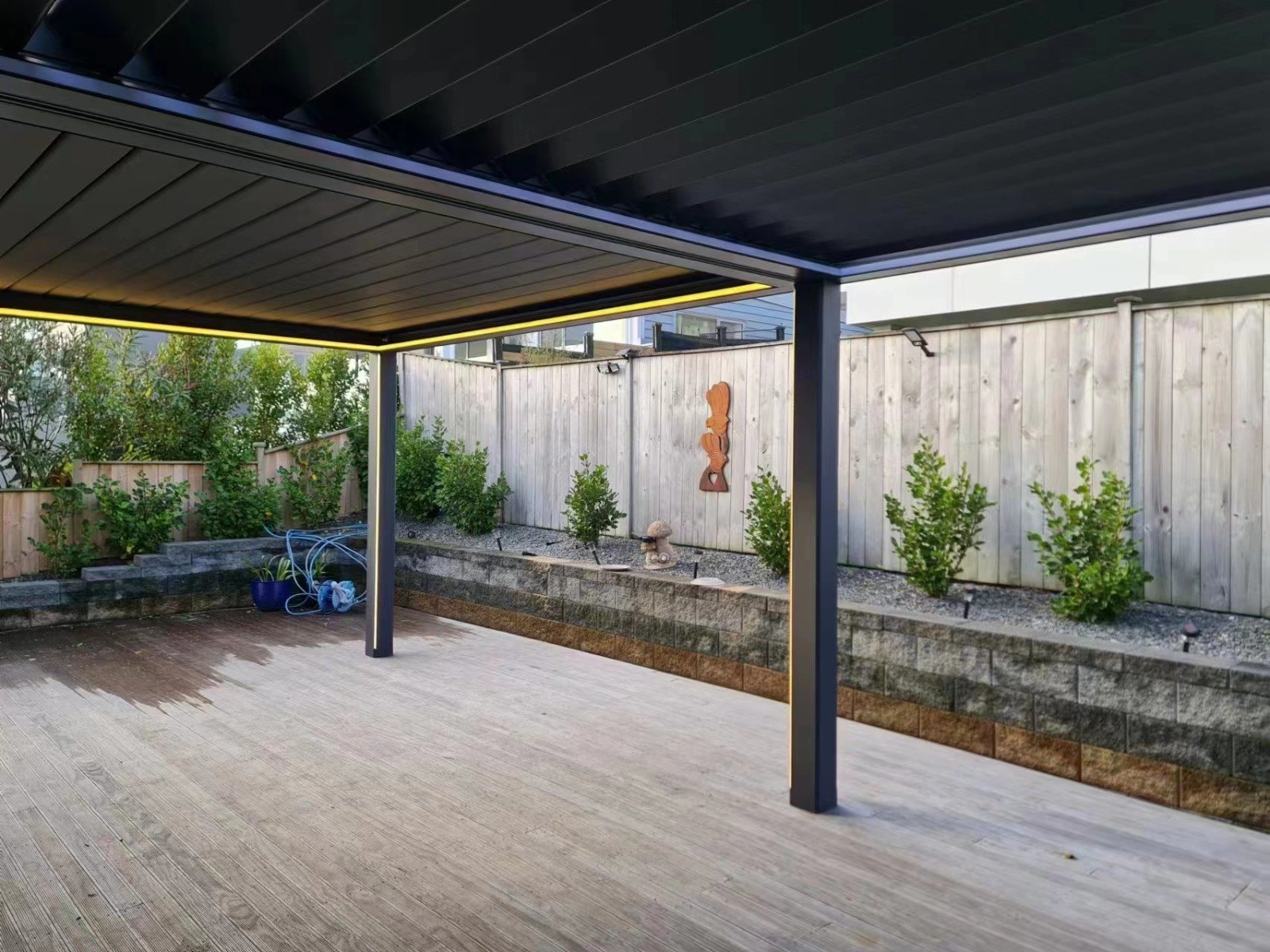
Aluminium pergola frames are complete systems
Posts, beams, connections and the roof need to work together. A slender-looking frame in a photograph does not establish its suitability for a different opening. Dimensions and support positions should be assessed for the chosen product and the actual site.
Ask to see the proposed frame in a drawing that includes the house and floor layout. Identify the clear height underneath and the position of each support. This makes it easier to recognise whether a beam will cross a window view or a post will restrict movement.
Ask for specifications with the proposal
The quotation should identify the product and finish rather than relying only on words such as premium. Request the information needed to understand what is supplied, who carries out the installation and which parts are covered by the stated warranty.
Compare finishes in real daylight
View finish samples beside the existing windows, exterior wall and floor. A dark frame can create a strong outline, while a lighter finish may blend differently with the building. Neither choice should be made solely from a screen image.
Surface appearance includes texture and gloss as well as colour. Ask how the selected finish should be cleaned and what the supplier recommends if it is scratched during later work around the property. Keep the finish reference with the project records.
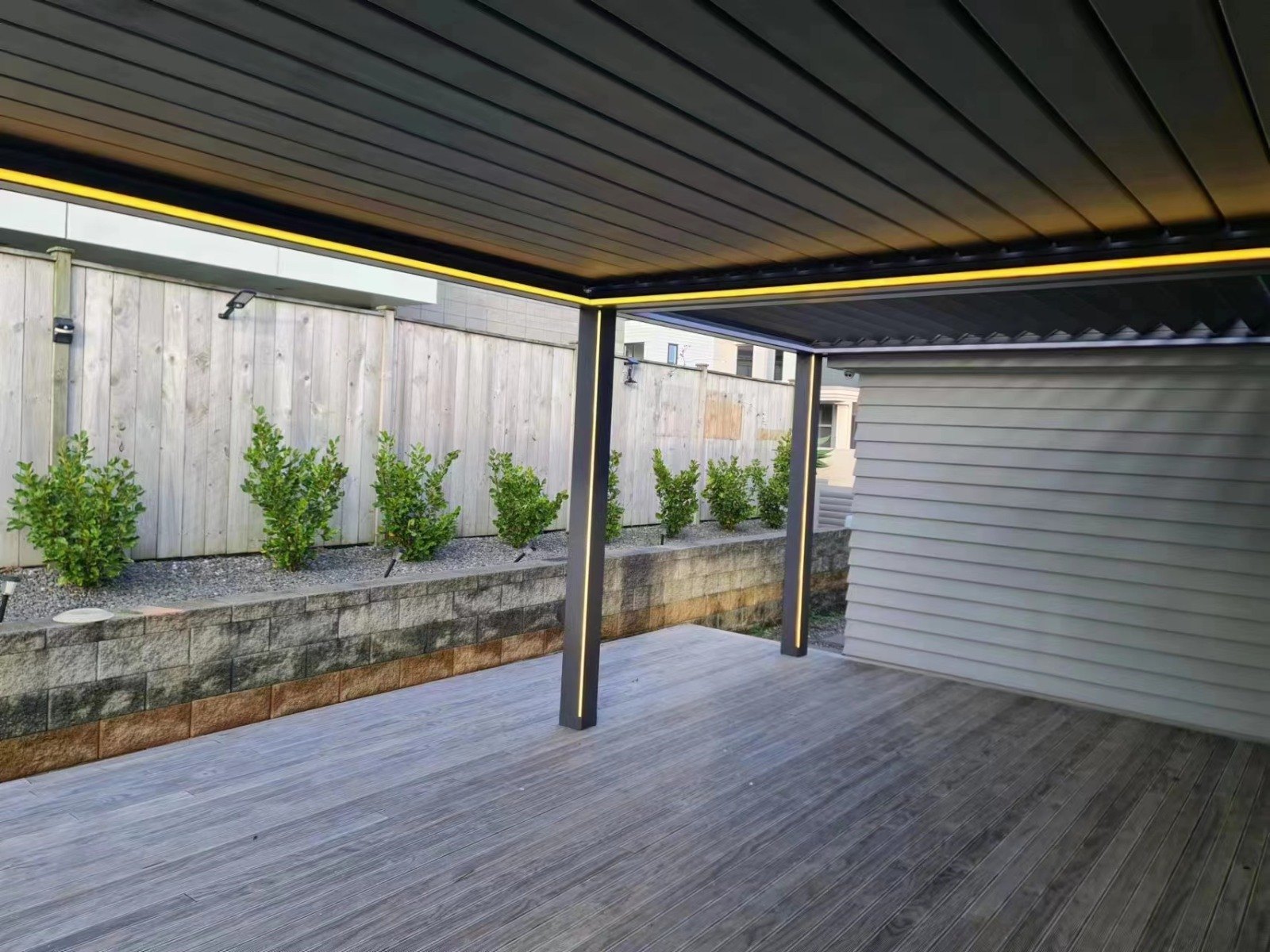
Avoid interpreting low maintenance as no maintenance. Outdoor surfaces collect dust and debris, and their condition should be checked periodically according to the supplied care instructions. A finish sample and written maintenance guidance provide a clearer basis for ownership than a broad durability claim.
Match the roof movement to your expectations
Some homeowners want adjustable blades; others want the covering to withdraw and reveal more sky. Ask the supplier to demonstrate the actual product rather than assuming every aluminium pergola opens in the same way.
Look at the bioclimatic pergola range when discussing louvred options. Compare it with a retractable pergola if opening the roof covering is an important part of your brief.
Look at the closed position too
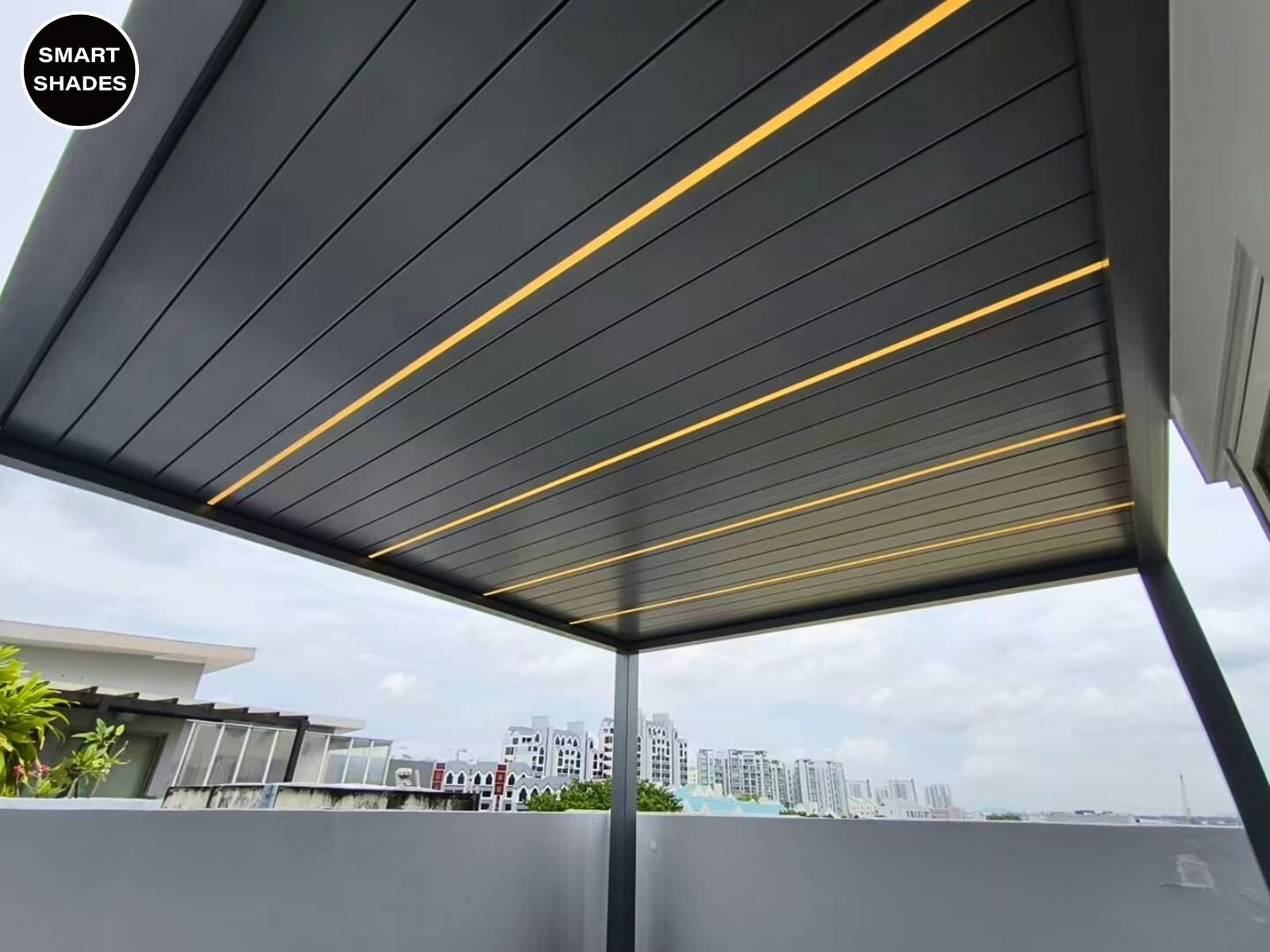
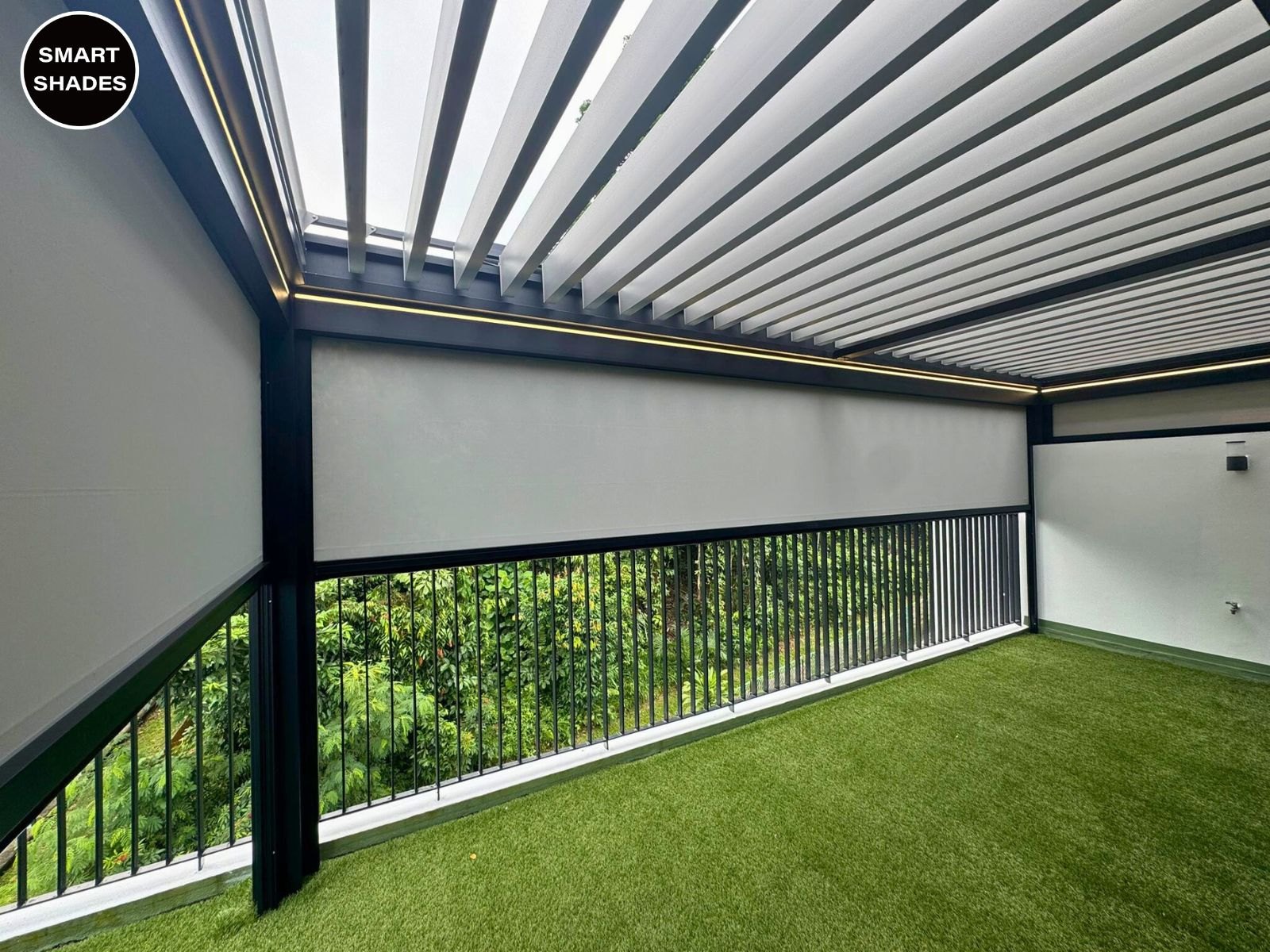
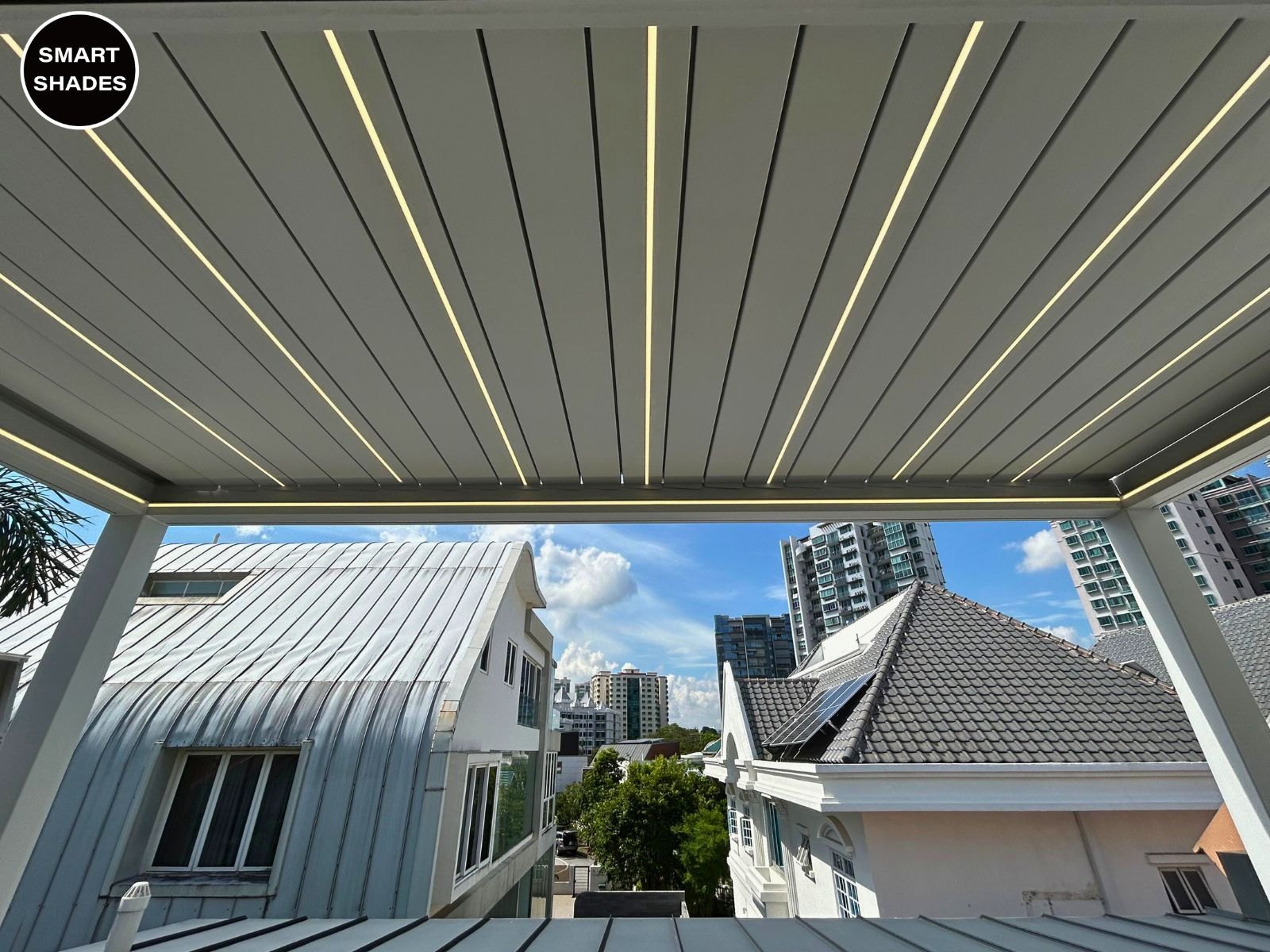
The underside is what you will see while sitting beneath the roof. Check how blades, beams and lighting fit together visually. Ask where the roof collects water and whether the chosen arrangement leaves sufficient room for servicing.
Review drainage as carefully as appearance
For a roofed arrangement, request an explanation of the water path through channels, gutters and outlets. Concealed drainage can create a clean appearance, but the system still needs access for checking and clearing debris.
Discuss the discharge point at ground level. It should be considered alongside doors, planting, walking routes and existing drains. Where the pergola connects to another roof, explain any water arriving from above so that the proposed detail accounts for it.
Open sides remain part of an outdoor space. Sideways rain and sunlight can enter below the roof edge. If these are key concerns, describe them separately rather than expecting the roof material alone to solve them.
Coordinate lighting and accessories
Integrated lighting should be selected around the activity below. A dining table, passage and lounge area may need different light placement. Ask where the driver and connections can be reached and how the lighting is operated independently, where that function is available.
Discuss any fans or side screens before finalising the structure. The supplier should assess compatibility, attachment and clearance. Avoid making plans based on attaching equipment to whatever beam happens to be nearby after installation.
Compare the full installation package
Use the same footprint and intended activities when requesting quotations. If one proposal has fewer posts or different roof movement, record that difference explicitly. Price comparisons become meaningful only when the main scope is understood.
A practical review should cover:
- The frame system, dimensions and finish reference.
- The roof type and normal operating procedure.
- Fixing locations and connections to the building.
- Drainage outlets and maintenance access.
- Controls, lighting and electrical responsibilities.
- Installation access, finishing work and service terms.
For a fixed roof comparison, review the trellis roofing options. The right decision depends on the desired space and operation, not on selecting one material label in isolation.
Keep ownership straightforward
Ask how future replacement work would be handled for individual controls, lighting parts or roof components. Availability and access are practical questions even when no repair is currently needed. A clear explanation of the service process helps you compare suppliers beyond the initial installation and understand which records will be useful if the property changes hands.
At handover, ask for a demonstration of any moving parts and a clear care routine. Keep the accepted drawing, finish details and warranty documents together. These records help when arranging maintenance or planning later work around the pergola.
Choose an aluminium pergola by considering the frame, roof and site as one project. A proposal that explains these relationships clearly is easier to evaluate and gives the household a better understanding of the finished outdoor space.